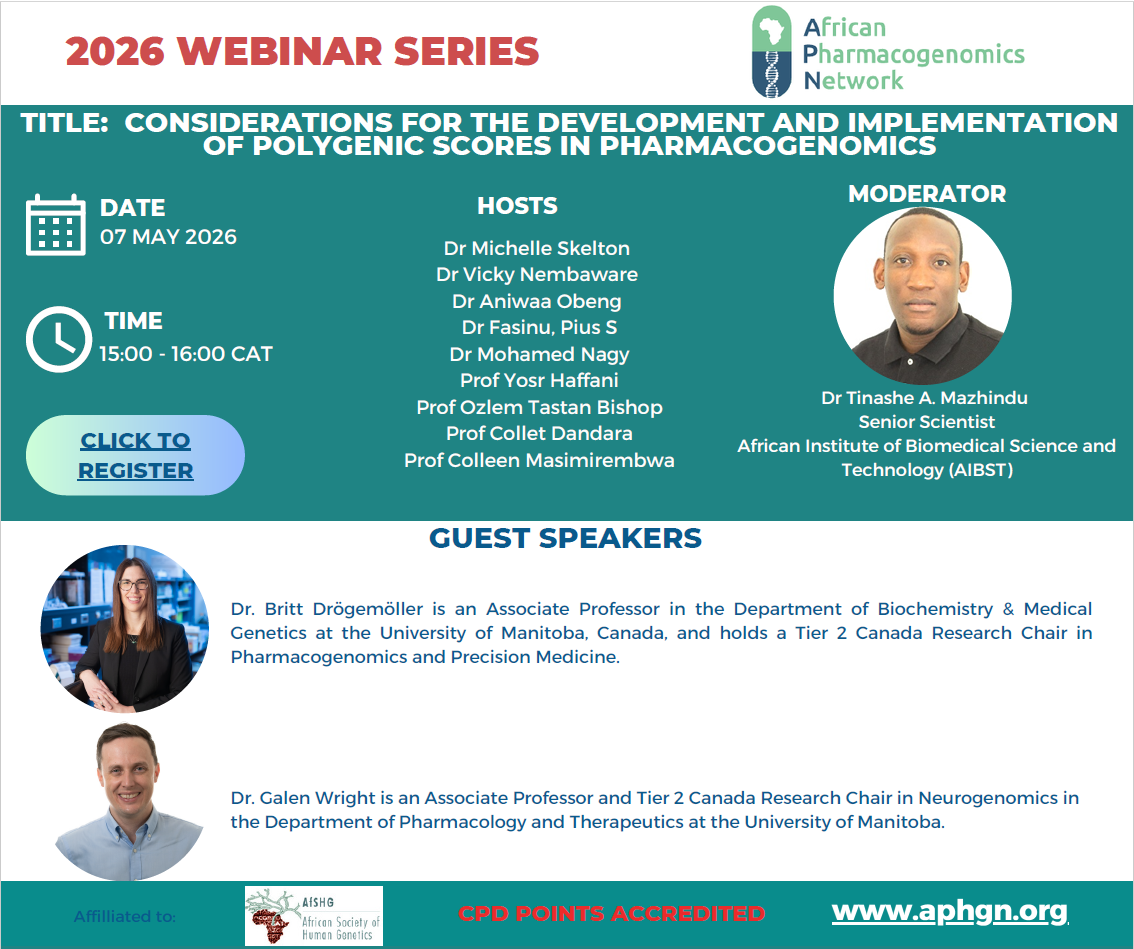
Join us via ZOOM every first Thursday of the month!
Click the link to register: Meeting Registration - Zoom
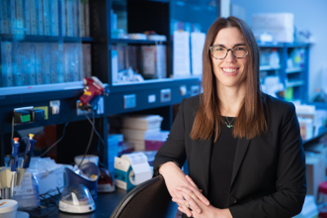
Dr. Britt Drögemöller is an Associate Professor in the Department of Biochemistry & Medical Genetics at the University of Manitoba, Canada, and holds a Tier 2 Canada Research Chair in Pharmacogenomics and Precision Medicine. Dr. Drögemöller received her PhD from Stellenbosch University in 2013 and continued her training in pharmacogenomics and precision medicine at the University of British Columbia, where she completed a postdoctoral fellowship at the Canadian Pharmacogenomics Network for Drug Safety in 2020. Dr. Drögemöller’s current research focuses on integrating large-scale human genomics and single cell transcriptomics data to understand the genetics and cellular mechanisms underlying hearing traits, such as cisplatin-induced ototoxicity and age-related hearing loss.

Dr. Galen Wright is an Associate Professor and Tier 2 Canada Research Chair in Neurogenomics in the Department of Pharmacology and Therapeutics at the University of Manitoba. His research interests lie in precision medicine and genetic modifiers. He completed his Ph.D. in Genetics at Stellenbosch University in 2012 and then received additional training in computational biology at the South African National Bioinformatics Institute. Dr. Wright moved to Canada in 2014 to begin a postdoctoral fellowship at the University of British Columbia, where he conducted precision medicine research on neurological disorders. In his independent research program, his team studies genetic modifiers of neurological disorders, with a key focus on Rett syndrome and repeat-expansion disorders. He uses a combination of large-scale bioinformatic analyses and functional genomic experiments in human stem cell models to identify novel therapeutic targets for improving neurological disease management.